License Plates, Phone Digits, and Web Addresses: Inside America's Quiet Obsession With Buying the Perfect Number
Here's a fun party trick: tell someone you know a guy who paid $15,000 for a phone number. Watch their face. Then tell them it happens every single day, legally, in marketplaces most people have never heard of.
Welcome to the lucky number economy — the strange, surprisingly liquid corner of American life where digits are assets, combinations are collectibles, and a six-character string like ours here at 515452 can carry real, negotiable value.
The Plate That Costs More Than Your Car
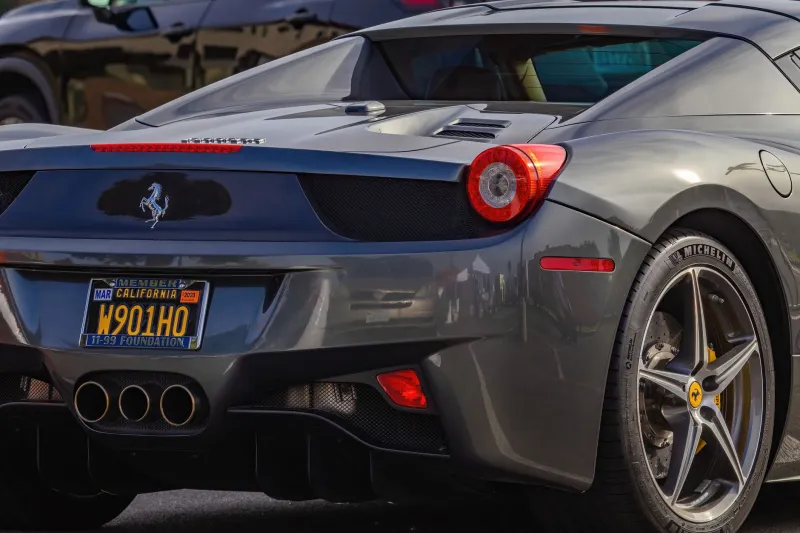
Start with the most visible version of this: vanity license plates. Most states charge a modest fee — $50 here, $100 there — for a personalized plate. That's the retail floor. The ceiling is a different universe.
At auction, single-digit and low-number plates have shattered records. Delaware, famously, has sold low registration numbers for eye-watering sums; a two-digit Delaware plate has changed hands for well into the six figures. In California and Texas, plate brokers quietly flip short combinations the way other people flip sneakers. The logic is simple: there's exactly one "8" plate in Delaware. Scarcity does what scarcity always does.
And it's not just round numbers. Certain digit patterns — repeats, palindromes, ascending runs — command premiums. 6-7-8 is worth more than 6-8-7. 1-2-1-2-1 reads like a rhythm, and rhythm sells. Ask any plate broker: buyers aren't purchasing metal and paint. They're purchasing a pattern their brain likes looking at.
Phone Numbers: The Original Digital Real Estate
Long before domains, phone numbers were the hot property. The 1980s and '90s saw businesses pay fortunes for repeating digits — think of the classic jingle-era numbers that ended in four identical digits because nobody could remember anything longer.
That market never died. It went digital. Today, secondary marketplaces list numbers by carrier and area code, and a "golden number" in Manhattan's 212 area code — the code people associate with old-money New York — can list for thousands. A 310 for Los Angeles, a 305 for Miami. Area codes have become class markers, the way ZIP codes always have. Some people refuse to give up a 212 number the way other people refuse to give up a rent-stabilized apartment.
There's also a quieter cultural layer here. In several communities — Chinese American, Korean American, Vietnamese American — digit beliefs imported from home shape what's valuable. The number 8 sounds like prosperity in Cantonese and Mandarin; the number 4 sounds like death. A number ending in four 8s can outsell one ending in 4s by a factor of ten, sometimes more. American marketplaces have absorbed these preferences wholesale. Check the pricing on any digits marketplace and you'll see it instantly: 8s are expensive, 4s are discounted. Superstition, translated into USD.
Domains: Where the Whole Thing Went Digital
Which brings us to the web. When short, word-based domains dried up in the late '90s, buyers moved to digits. Every possible three-digit .com was registered long ago. So were the four-digit, then five-digit, then six-digit .coms — all 90 million of the six-digit combos, snapped up by speculators who saw where the curve was heading.
That's the ecosystem a domain like 515452 lives in. Is it a phone number? A ZIP code fragment? A lucky combination? Doesn't matter. What matters is that it's short, it's numeric, it's memorable, and there is exactly one of it. Numeric domains have become the workhorses of the internet economy — the redirects, the portals, the placeholder addresses that quietly route millions of clicks. Chinese investors famously drove a massive bull market in numeric domains in the 2010s, pricing them by length and digit composition. A domain heavy in 8s trades at a premium; one loaded with 4s, at a discount. The same superstition, the same market mechanics, one layer deeper into the internet.
So Who's Actually Buying?
The buyer pool is more varied than you'd think:
- Small business owners who want a number customers can't forget — a locksmith with a repeating-digit phone line will tell you it pays for itself.
- Collectors, plain and simple. The same people who chase rare coins chase rare plates and short domains.
- Immigrant communities maintaining digit traditions from home, buying 8s and avoiding 4s across every category.
- Speculators, who don't care what a number means, only that someone else will pay more for it later.
- Status seekers, for whom a 212 number or a single-digit plate is a flex that doesn't need explaining at the country club.
What's a String Like 515452 Actually Worth?
Honest answer: it depends on the market and the moment. Six-digit .com domains are the most common tier — the entry level of numeric collecting — so they trade in a wide, humble range. But the factors that move value are always the same: length, pattern, cultural luck, and whether the digits happen to mean something to a motivated buyer. A number is worth whatever the one person who needs that number will pay.
And that's the whole weird story, really. Numbers are supposed to be the neutral, meaningless stuff of the universe — the thing that isn't a name, isn't a brand, isn't loaded. Except Americans, like humans everywhere, can't stop loading them. With luck, with status, with memory, with money.
A string of digits is never just a string of digits. Ask anyone who's ever tried to buy one.