Logging Off for Good: The Quiet Movement of Americans Who Are Deleting, Canceling, and Unplugging in 2025

Photo: smial, FAL, via Wikimedia Commons
Somewhere between the fourth streaming service password reset and the third notification asking you to rate a show you barely remember watching, something snapped. For a surprising number of Americans — particularly those in their late 20s through early 40s — that snapping point became a turning point. They started canceling. Deleting. Unplugging. And a lot of them say they're not going back.
This isn't a fringe thing anymore. It's a genuine cultural shift, and it's costing the entertainment industry real money.
The Numbers Behind the Exodus
Streaming subscriber growth has stalled in ways that can't entirely be explained by market saturation. Analysts at multiple research firms have flagged an uptick in what they're calling "intentional churn" — people who aren't leaving because they found something better, but because they've decided they want less. A 2024 survey by Deloitte found that nearly one in three millennials had voluntarily reduced the number of entertainment subscriptions they held compared to the previous year. That's not cord-cutting for budget reasons. That's a values shift.
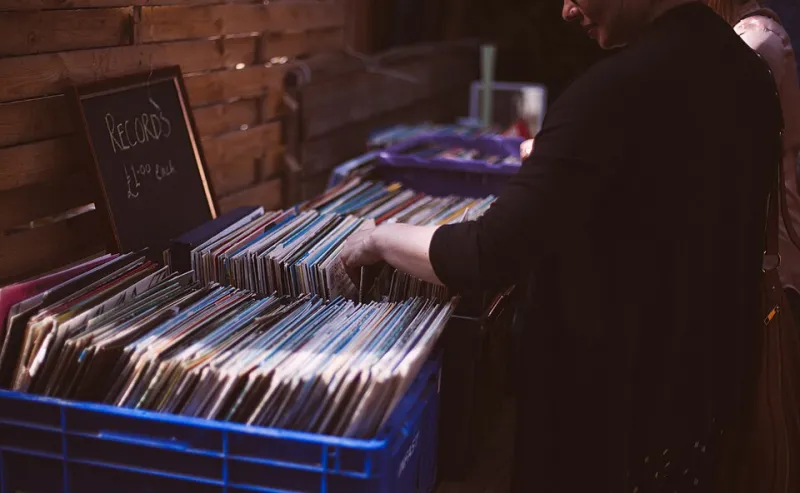
And it goes beyond streaming. App deletion rates are up. Social media account deactivations are climbing. Board game sales, vinyl record purchases, and library card sign-ups have all seen bumps that analysts are now linking, at least in part, to the same underlying impulse: people are tired of the digital pile-on.
What's Actually Triggering the Detox
Ask people who've done it and you'll hear a few recurring themes. Burnout is the big one. Dr. Priya Menon, a behavioral psychologist based in Chicago who works with clients on what she calls "digital overwhelm," says the pattern is consistent.
"There's a ceiling to how much stimulation the brain can process as pleasurable," she explains. "When you're cycling through five apps before bed and none of them are giving you that dopamine hit anymore, your brain is essentially telling you it's full. A lot of people interpret that as boredom, but it's actually exhaustion."
For 34-year-old Marcus T., a project manager in Austin, the trigger was more specific. "I added up what I was spending on entertainment subscriptions in a month and it was over $180. And I genuinely could not name five things I'd watched in the last two weeks that I actually enjoyed. I was just... running the apps."
He canceled four services in a single afternoon. Kept one. Says he watches more intentionally now and feels less guilty about it.
The Analog Comeback Nobody Predicted
Here's the part that surprises people: what folks are replacing screens with isn't nothing. It's old stuff. Actual books. Jigsaw puzzles. Cooking from scratch. Hiking without earbuds. The analog entertainment revival is real, and it's being driven largely by people who grew up digital and are consciously choosing to step back from it.
Minimalism advocate and podcast host Jordan Reeves, who runs a community of about 40,000 people focused on intentional living, says she's seen her audience shift dramatically in the last 18 months.
"Two years ago, people came to me about physical clutter — too much stuff in their apartments. Now at least half the conversations are about digital clutter. Too many apps, too many subscriptions, too many group chats. The mess just moved online and people are finally noticing it."
Reeves herself ditched three streaming platforms last year and replaced her evening scroll habit with watercolor painting. She's quick to note she's not anti-technology — she runs her entire business online — but she's deliberate about where her leisure time goes.
The Industry's Uncomfortable Reckoning
For entertainment companies, this trend is awkward to acknowledge because their entire growth model is built on more. More subscribers, more watch hours, more engagement, more data. The idea that a meaningful chunk of your audience might be psychologically fatigued by abundance doesn't fit neatly into a quarterly earnings call.
But some cracks are showing. Netflix's recent pivot toward event-style releases — dropping fewer shows but making bigger bets on cultural moments — looks a lot like a response to attention scarcity, even if they'd never frame it that way. Disney+ has quietly pruned its content library. Even Spotify has been experimenting with "listening sessions" designed to feel more curated and finite.
The entertainment industry is, slowly and somewhat reluctantly, learning that infinite scroll might have a shelf life.
Does the Break Actually Stick?
This is the honest question, and the answer is: sometimes. Dr. Menon is candid about the relapse rate. "Most people who do a hard digital detox come back to some version of what they left. The goal probably shouldn't be permanent abstinence — it should be a reset that helps you rebuild a healthier relationship with the content."
Marcus, our Austin-based project manager, admits he re-subscribed to one service he'd canceled after about three months. But he says the break changed how he uses it. "I watch something specific, then I close it. I don't let it autoplay. I don't browse. That's the part that stuck."
For others, the changes are more permanent. Several people we spoke to described giving up social media entirely and having no intention of returning. A 38-year-old teacher in Portland told us she deleted Instagram 14 months ago and the thing she misses least is "the feeling that I was supposed to be doing something more interesting with my weekend."
What This Means If You're Running the Math
Here at 515452 Hub, we're all about helping you navigate the noise — and right now, the noise includes figuring out which corners of your digital entertainment life are actually worth the real estate. If you haven't done a subscription audit recently, the people in this story would tell you that's the first step. Not because minimalism is inherently virtuous, but because paying for things that don't make your life better is just a bad deal.
The entertainment industry will keep expanding its offerings. That's not going to stop. But more people than ever are deciding that the right number of streaming services isn't the maximum available — it's the number that actually fits the life they're trying to live.
Sometimes the most countercultural thing you can do is just... close the tab.